Popular culture is understood as a collective dream world ( Storey, 2015), a world which most of us make contact with in some form either consciously or otherwise. It provides us with blissful moments of escape and can offer empowerment through ‘networked communities‘. Naturally this is a subjective ecosystem.
To create loose parameters Raymond Williams suggests four ideas delineating popular culture, ‘well liked by many people’, ‘inferior kinds of work’, ‘work deliberately setting out to win favour with the people’, ‘culture actually made by the people for themselves.‘ When asked what pop culture I consume, I realise I am consulting my Tarot deck. This is a past time I have relished in both solo and social settings, subconsciously shuffling my Wild Unknown deck for all my quandaries, trivial or not. This has been a pastime for centuries spanning multiple cultural adaptations and lineages from the ancient egyptians, to an Italian card game and Occultish types in our present day.
In the evenings Tiktok is a flurry of live, virtual card readings and wild insights garnered only from sharing your name and potential question. Over on instagram you can pick a card in a story for your daily mystical desires. Pop culture fandoms has also bled into tarot decks creating another layer of adaptation and inception to this already global phenomenon. This universal recognition of the 78 card deck and four suits can be viewed through a ‘glocalised’ lens by ‘tailoring goods to particular markets (Robertson, 1995) as demonstrated by decks ranging from Norse to Korean and adaptations to My little pony. Although we don’t know for certain the origin story of these cards and thus its trajectory, what we do know is that the suits and major arcana transcend language and cultural proximity in ‘multidimensional’ manner (Iordache et al 2018).
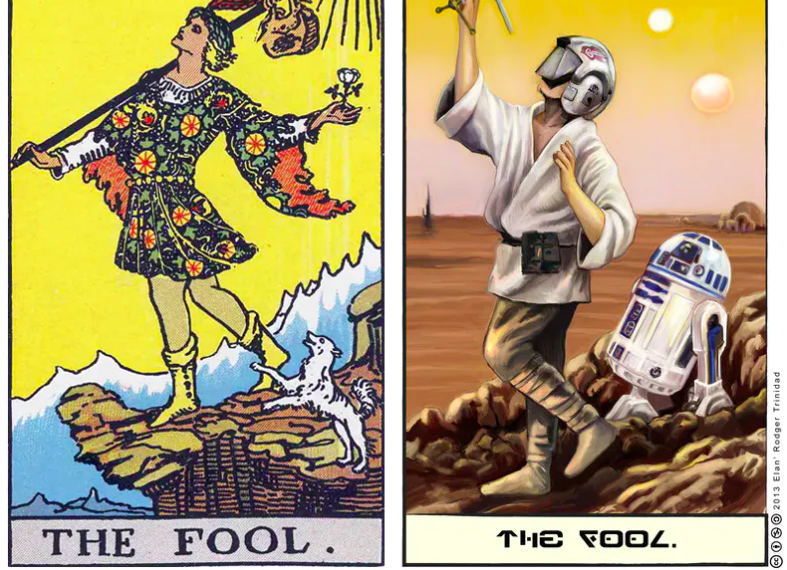


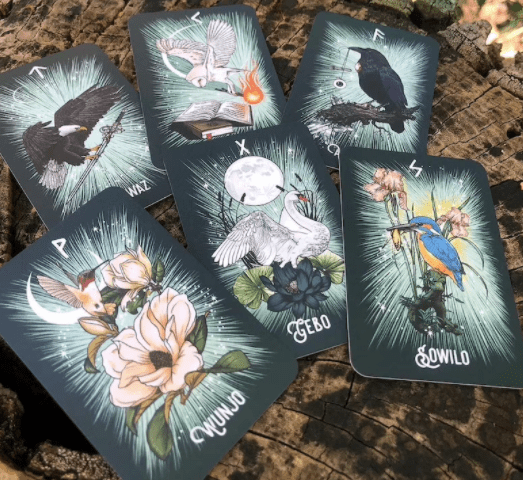

I always thought Taro was quite niche and underground, reserved for full moon circles but it’s upsurgence on the Web 2.0 suggests otherwise. No longer confined to dimly lit rooms that reek of sandalwood, tarot readings have been mainstreamed by the internets power to connect audiences. Through its literal symbolism, Tarot can be decoded by a diverse array of audiences. As O’Shaunessy notes, ‘The global dispersal of knowledge facilitates a culture open to sharing responsibility for issues that affect us all and recognising responsibilities to people that we may never meet (2012, pg. 460). Tarot decks may come from a culture or realm outside of our own but the way we interpret and interact with them comes from a localised lens based on our own biases and knowledge. The social platforms that we employ to share and communicate on, offer a disruptive element to the traditional flow of media and the humble TikTok tarot yet another means of connection in isolating times.
When queried whether I’d get a HD on this paper, the cards spoke. A nine of wands signifying strength, stamina and confidence; suggesting that my hard work would soon pay off. One can hope.
- Global media flows: A qualitative review of research methods in audio-visual flow studies’, Catalina Iordache, Leo Van Audenhove, Jan Loisen, (Oct 28, 2018)
- Storey, J. 2015, Cultural Theory and Popular Culture : An Introduction, 7th ed., Routledge, New York.
- O’Shaughnessy, Michael (2012) ‘Globalisation’. In Media and Society: 5th Edition. South Melbourne: Oxford University Press, pp. 458-471


 Jane BAMBI Drew
Leave a comment