
Introduction
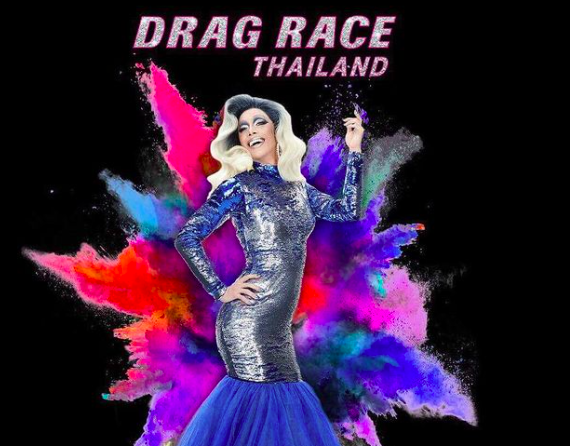
‘Diversity, beauty, equality, freedom’ are the lyrics to the theme song of Thailand’s version of RuPaul’s Drag race (RPDR) which is literally and figuratively quite a different tune from the shows origin theme song which decries, ‘start your engines, may the best woman (now edited to drag queen) win!’ This simple shift in lyrics and intent positions RPDRTL in a new light offering the viewer a twist on the well-worn format of Drag Race America which has dished out thirteen seasons, several spin-offs and almost carbon copy reproductions in Australia, the UK and Canada. Global reality television franchises have become a dominating force in today’s landscape as the amalgamation of pop culture and the internet have enabled and united global communities. These transnational flows aren’t as unidirectional as they once were and the glocal (local adaptations of global) form ( Straubhaar 2007, pg.4) of RPDRTL highlights that both the contestants and the audience have multilayered and complex cultural identities ( Pastina and Straubhaar, pg 4) that endear themselves to this already successful empire, gratifyingly adding fuel to the never ending drag race.
Could the unapologetic dime bag drag, multilingual lip syncs and Art Arya’s flippant quips be the wind under Thailand drag skirt? This report discusses Thailand’s adaptation of RPDR and how its culture and queer history add to making this season feel unique and refreshingly authentic within the confines of a television format. RPDR America was groundbreaking in offering a spotlight to queer drag performers but of late feels constrained and limiting perhaps as ‘the logic of television undoes the freedom of drag’(Kardolus and Hermes, 2021). As the multifaceted gender identity and expression discourse evolves globally, Drag race Thailand seems to lack any of the cringe found in its American counterpart and instead offers the world a glimpse of its culture seemingly with a herstory of acceptance.
This report will explore the underpinnings of global television formats and how cultural proximity factors into their success or demise via RPDR. Thus we can gauge how audiences perceive belonging and the endlessly negotiable relationship with tv scapes.
Annotated bibliography
Chalaby, J.K, 2011, “The making of an entertainment revolution: How the TV format trade became a global industry”, European journal of communication (London), 2011-12, Vol.26 (4), p.293-309. This paper offers an overview of how television formats became global based on the four ‘super formats’ such as Big Brother and the Survivor franchise. Through this lens, the flow and domination of structured formats depict how various adaptations aid in fuelling the economic growth and proliferation of these shows. This creates a base understanding of why and how shows become global and the marketing ideas solidifying their success in the reality tv ecosystem. Through chronological observation of the super four, this paper highlights how licences harness their purchasers into adhering to the show’s design. Though this paper does not draw specifically on the RPDR empire, it provides a road map outlining how this pop culture icon made movements transnationally. Despite being slightly outdated this article succinctly uses clear examples to denote the business side of reality tv and it can be gleaned that performers on these types of shows may not simply be participating for the love of their craft but instead to garner world recognition. It is also noted how scripting can affect the perceived authenticity of a show.
Hermes, J & Kardolus, M 2021, “The RuPaul paradox: Freedom and stricture in a competition reality TV show, Javnost. This article questions whether RPDR has pigeonholed drag into a heteronormative category that is easy to unpack for its global viewers and as a result has excluded certain communities despite its overarching message of freedom. This audience-led article looks into the post-filming editing that occurs in reality tv shows to redefine moments, create drama or otherwise skew audience perception of competitors. The author acknowledges their white ethnicity and thus includes voices from subreddits and Twitter posts although this is limited. Does RPDR race offer a parallel to societal values or does its value diminish via its bridled format, this questioning angle makes this a poignant voice in this report. This article denotes briefly the culture of drag in the public space and its evolution thus far as this article dates to 2020. It questions the context of RPDR as a structured business model and questions its ongoing tenure as a space for queer voices. Has RPDR become a bully, this article thinks so and uses a reasonable amount of introspection to conclude this. This is a useful text for this report.
Jackson, PA 2011, “Queer Bangkok twenty-first-century markets, media, and rights” pg 1-13, in Hong Kong University Press, Hong Kong. This book details queer culture in Bangkok Thailand through the period of the first decade of this century. It describes that the English languaging of ‘queer’ is not a term used in Thailand, instead of using the term ‘phet’ which incorporates sex, gender and sexuality, a master concept central to the legal, academic and popular discourse of gender and sexuality. Thus phet includes more than two genders and ‘Klam Phet’ means the crossing over or blurring of identity. This text includes transnational perspectives reflecting the interest in queer Thailand and its spiritual roots. The first 13 pages of this book are utilised in this report to add cultural context and backstory adding to the perspective of the report that RPDRTL is successful due to its culture.
Suna, L. 2018, “Negotiating Belonging as Cultural Proximity in the Process of Adapting Global Reality TV Formats”, Media and Communication, vol. 6, no. 3, pp. 30-39. This article explores the underpinnings of emotional universality in Reality TV programs and how these ‘meta-narratives’ are adapted in trans-local formats. The omnipresent ‘cultural proximity’ tethers profit-driven reality formats with our emotional manipulation in a protean manner by using the perspective of experts (12 producers) viewed through 5 categories. The hybridisation of RPDRTL and the audience position can be ascertained from this text by mirroring it to the perceived glocal emotions of the empire. This article discusses the base emotions evoked in reality dramas and that beauty is a culturally typical ideal that morphs depending on the geographical setting. This article lends itself to this report as it contextualises the ‘industrialisation of emotions’ and how the viewer can be puppeted through age-old storytelling techniques. Due to the angle of the show producers, an analysis of audience perspective is not included. This is something that will be divulged through this report.
Results/ Discussion
The above texts delineate the constructs of RPDR and how its transnational manifestations allow an important role for audiences in defining the (de)merits of the show (Hermes & Kardolus 2021). Through the understanding of formats as ‘bibles’, where local producers can alter the flesh but ‘never touch the skeleton’ (Chalaby 2011) the viewer can garner the assembly behind the megalithic empire that is RPDR and how this thriving show offers Thailand a voice beyond the confines of their borders (Chalaby 2011), bridging cultures in a multidirectional manner and offering a greater scape for inclusion. Culturally proximate audiences both real and imagined (Straubhaar, 2007) are engaged in this world that is special and almost unattainable and can be forgiven for forgetting that the emotions performed by the candidates is a calculable commodity which can be sanctioned or positively emphasised (Suna, 2018). This is where RPDRTL shines as the competitors are sassy and cheeky and despite the subtitles a broader global audience can still experience these emanations.
RPDRTL seems at ease with queer culture and Jackson (2008, pg 7) notes the distinctiveness of Thai queer cultural production within a global context as a means to expand and intensify cross-border connections. Throughout the season, there is little discourse on the competitors binary definitions and original inclusivity of drag shines.
Filar (UK independent 2018) states that queer women, non-binary people, and other trans people deserve access to the art of satire, yet this sentiment seems unfulfilled in many of the western versions of drag race. RuPaul might have urged the dismantling of the patriarchy but he appears complicit in the ranks of capitalism and his own potentially narrow views on gender norms.
RPDRTL offers a vector through a country that appears to be very grounded in its queer culture and thus displays and applauds difference and diversity, Pangina Heals (Holde, 2018) thinks Thai people are generally “less sensitive about what is male or what is female” and do “celebrate people for their creative expression”.. The runways are awash with cultural symbolism and ‘untucked’ deviates from its western counterparts by focusing on the spirit of the competitors and their creative concepts and less on faux drama and falsified cattiness that is imbued in the shows editing in the west. Drag race appears to blossom organically in Thailand perhaps despite competition reality television requiring success and savvy self-management in order to sell the self (Hermes & Kadolus, 2021). Here we are allowed to be more focused on the workroom sewing struggles than the queens post production identities.
Conclusion / Recommendations
Art Arya and Pangina Heals are spellbinding hosts and compel this realm effortlessly, both for the competitors and the audience, move over Ru! RPDRTL manages to recreate the drag race format in a soulful manner and perhaps it is the Eastern cultures gender bending attitudes that attribute to its success. As a single language-speaking white female, I find this show accessible and appealing as it offers a reentry into a format that I had grown weary of. By expanding globally Drag Race has seemingly broken out its own box, perchance to tell new ‘emotional stories’, bind a greater universal audience and continue to roll in the profits. I am not upset by this.
Baudinette (2019) suggests that Boyslove, a Japanese show that is prominent in Thailand represents a watershed moment in positive representations of queerness in Thai media and it could be garnered that RPDR is also acting as a conduit for queer-positive discourse in the country as well showcasing Thai culture abroad. As with any television empire, there will always be the dystopian undercurrent. Do we really need RPDR? For me, it’s a hill I’m willing to die on.
Reference list
Baudinette, T (2019) Lovesick, The Series: adapting Japanese ‘Boys Love’ to Thailand and the creation of a new genre of queer media, South East Asia Research, 27:2, 115-132, DOI: 10.1080/0967828X.2019.1627762
Chalaby, J.K, 2011, “The making of an entertainment revolution: How the TV format trade became a global industry”, European journal of communication (London), 2011-12, Vol.26 (4), p.293-309.
Hermes, J & Kardolus, M 2021, “The RuPaul paradox: Freedom and stricture in a competition reality TV show, Javnost.
Holden S (2018) ‘The Ru Paul’s Drag Race spin off you probably haven’t seen.’ BBC NEWS https://www.bbc.com/news/newsbeat-43680869
Jackson, PA 2011, “Queer Bangkok twenty-first-century markets, media, and rights” pg 1-13, in Hong Kong University Press, Hong Kong
La Pastina, A. C. and Straubhaar, J. D. (2005) ‘Multiple Proximities between Television Genres and Audiences: The Schism between Telenovelas’ Global Distribution and Local Consumption’, Gazette (Leiden, Netherlands), 67(3), pp. 271–288. doi: 10.1177/0016549205052231.
Straubhaar, JD 2007, World television : from global to local , Sage, Los Angeles.
Suna, L. 2018, “Negotiating Belonging as Cultural Proximity in the Process of Adapting Global Reality TV Formats”, Media and Communication, vol. 6, no. 3, pp. 30-39


 Jane BAMBI Drew
Leave a comment