‘Individuals with a large number of newly established relationships (eg university students) may have struggled to transfer these relationships online ( Long et.al, 2002). With the great Covid upheaval still fresh in our minds, I researched whether we have transferred our relationships offline; back in person via the once classical social motif of the bar, in particular the university bar.
After conducting an online poll that delineated very few participants frequented the uni bar at all, I engaged in interviews with 5 consenting participants from my BCM cohort to gain a more layered and qualitative insight into students thoughts around this institution. Being aware of ethical constraints, my line of questioning was surface level and avoids looking at students relationship with alcohol.
Most students in this survey are in the second year of their degree and could be forgiven for not knowing where the duck lawn is let alone the uni bar. But I still wanted to know if the pub was at all a social crutch for them and if we had dusted off enough of the isolation incarceration mindset to brave the land of the frothy pint. These are their anecdotal accounts.
In respect to my limited sample size, there were two main themes that appeared in my research; that the university bar was found to be an intimidating by some participants. This is perhaps a repetitive theme in pub culture, ‘female friendly pubs are still a long way off, suggesting that women would be unlikely to go to the pub for anything other than a group or pre arranged meeting ( Andrew. D 2012)’ and that it was not a space utilised for cultivating new relationships, ‘I’m better at it (making friends) when there is alcohol involved,’ says participant 3.
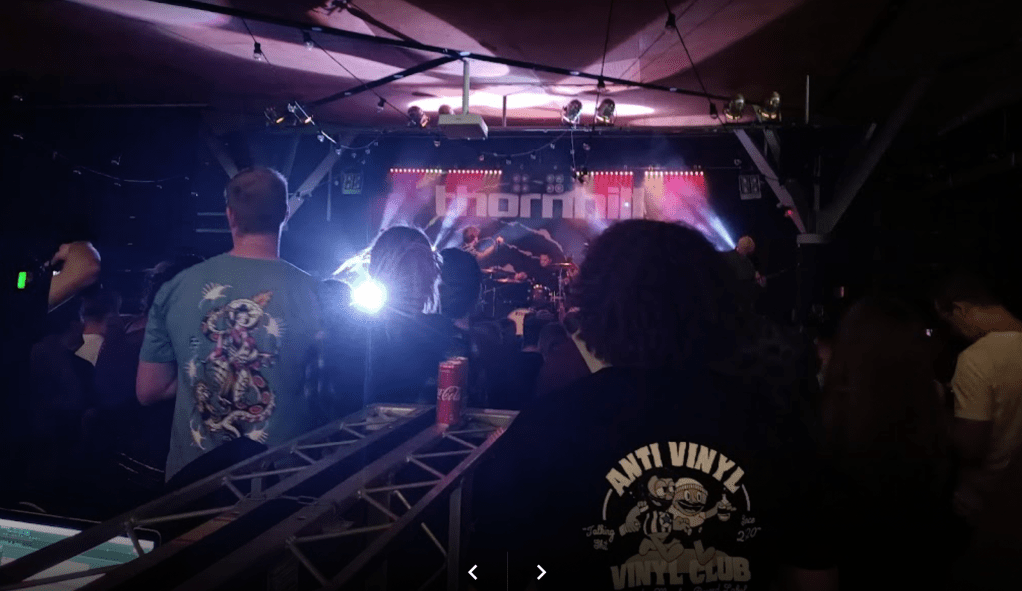
All participants said they had been to the uni bar with the vast majority stating that they frequented it on occasion, predominantly for gigs or events. The enormity of campus life and study can be enough for many students and ‘during the transition through uni, students are faced with the challenging task of forming new relationships in unfamiliar situations ( Cook et. al, 2021).’ This could allude to the reason why the study participants chose to go to the uni bar with an already established groups of friends.
The uni bar is unique in that it’s not just your local watering hole down the road. It’s infused with academia, (one participant would go there to ask her tutor questions), the burden of your study load for the day and gravity of trying to be symbiotic with your peers. Participant 3 offered that she felt ‘awkward’ in this ecosystem even though she went often, when I compared it to an American college cafeteria she responded, ‘I find the uni bar intimidating, maybe because you have to walk past everyone to get in … I subtly try to find my friends or a table but I don’t want to walk around whilst everyone is in there group.’ Another participant echoed, ‘you may think that everybody is looking at you, but they are not.’
To address the elephant on the lawn, it should be noted that students possess ‘strong beliefs in the college drinking culture, ( Osberg, T. 2021)’ and data suggests ‘university students drink more heavily then there peers (Kyprik et al. 2010) despite ‘teetotalism having risen by forty percent ( Cook et. al. 2021).’ If students had to drive then they opted out of drinking but if not, ‘I’m going there right after this {interview} for shots.’

The overall tone of the interviews was imbued with a stand-offish fondness for the uni bar in a more nuanced light in that it was a space to be enjoyed beyond a beer with one participant stating, ‘People need to stop seeing it as such a serious place where you have to drink, you can just hang.’ The offerings of drag shows, good food and affordability were strong draw cards that as the distance between us and that fateful pandemic lengthens, the more likely students would return a more normative culture of frequenting the bar.
Across the interviews it was apparent that the university bar was indeed a place of social contact even if it was confined to known friends as resonated by Deanne, C (2016) ‘shared memories of people and places are used to fashion and maintain social relations.’ My research denoted that in fact the uni bar was still a pillar in university life passed down through the ages as participant one fondly adds, ‘My mum went to uni in Scotland and she told me that she basically spent every second she wasn’t in class at the uni bar with her friends and that it was amazing, that it was the highlight of her time.’
Within my very limited sample size I found that the study implanted a desire for all participants to go there post interview and this suggests to me that as we awaken from vast extenuating circumstances, my assumption bias that we may have become unsociable cyborgs simply didn’t ring true. A sense of belonging potentially anchored around a tipple and shared experience is still a strong sentiment of university experience.
Long E, Patterson S, Maxwell K, et al, COVID-19 pandemic and its impact on social relationships and health. J Epidemiol Community Health 2022;76:128-132. https://jech.bmj.com/content/76/2/128.
Andrews, D. & Turner, S. 2012, “Is the pub still the hub?”, International Journal of Contemporary Hospitality Management, vol. 24, no. 4, pp. 542-552.
Cook, E, Davies, EB & Jones, KA 2021, ‘“Drunk People Are on a Different Level”: A Qualitative Study of Reflections From Students About Transitioning and Adapting to United Kingdom University as a Person Who Drinks Little or No Alcohol’, Frontiers in psychology, vol. 12, pp. 702662–702662.
Kypros Kypri, Mallie J. Paschall, John D. Langley, Joanne Baxter, Beth Bourdeau,
The role of drinking locations in university student drinking: Findings from a national web-based survey,
Drug and Alcohol Dependence,
Volume 111, Issues 1–2, 2010.
Osberg, TM & Doxbeck, CR 2021, ‘Partying during a pandemic: role of descriptive partying norms, residence, college alcohol beliefs, and political ideology in COVID-19 party behavior’, Journal of American college health, pp. 1–11.
Deanne, C, 2016. Socialising place attachment: place, social memory and embodied affordances. Ageing and Society, 36(8), pp.1645–1667


 Jane BAMBI Drew
Leave a comment