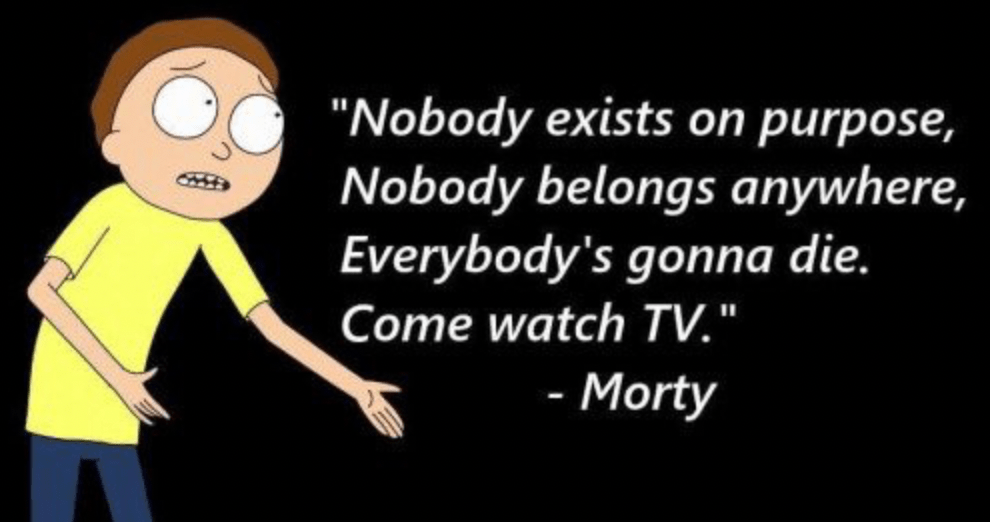
To borrow some of Schon’s words, ‘we must learn to understand, guide, influence and manage these transformations’ (Schon, 1973). Yep, this statement on the ‘stable state’ checks out for the vivd flux state we have all found ourselves in for the last while and the need to be adaptive greyhounds ( malleable and speedy) is paramount in our current ecosystem of rapid change and outward forces all whilst trying to learn in the uni world paradigm.
Reflexivity is crucial in life and in our university vacuum and something I’ve found particularly interesting in this subject. I didn’t realise the enormity of work that goes into research and to have something published requires a lot of ethical awareness, good practice, in depth reading and follow through.
I chose to base my research on the university pub because our guidelines were so strict on whom we could engage within our research, I wanted to keep it fun and to be honest I was so bloody curious to see how far covid had pushed us outside our normative behaviours. Let’s look at reflection in action. As I began this process, I knew I wanted to do interviews as I am studying journalism and I think the more intimate setting of interviews offers anecdotes that are lost to data in quantitative research. I was only allowed to look at my BCM cohort so why not look at this scintilla of data in a meaningful way. These are the words of our era, how beautiful to have plucked some of them out of people and recorded them in my opinion piece.
Feed back loops and echo chambers are important concepts in research. It’s easy in this day and age to find an opinion or even solid research that back up your own point of view and I would have conducted more interviews if I had found people were aligning my personal bias that we don’t socialise at the bar anymore but I was pleasantly surprised to find that participants noted that they do in fact hang out in this space. After I started to see these dappled responses to my questions, I realised I needed an angle….secondary source material was of course dense. Was I going to look at the covid angle, the problem drinking in college, socialising practices etc.

It was pretty near impossible to find exactly what I was going for but I was able to critically look at the sources and reflect on how they might be tethered to our little micro verse at UOW. I also think that because I couldn’t find too much direct source info that this could actually make for a ‘real’ research topic in the future. I find it difficult to dim my voice through writing, and to be objective so I am curious whether my piece comes across as such or if our pre determined bias and dominant discourse dominates too strongly.
I think the idea of spiralling in important in research, ‘rather than just going around in circles and ending up in the same place, describes the sense of going around in circles, but at the same time, going deeper (Beres, Fook 2019, pg 6). If given unlimited time, I would certainly have sought to traverse into deeper water with this topic because it’s potentially quite a mammoth topic.
Ok so this double loop learning eh? I’ll let someone else unpack that; ‘this stage requires deeper thinking, and challenges the underlying assumptions and premises that support our stated goals, values and strategies (Synnott, 2013). Was the research task appropriate for our time frame, resources and comprehension? Absolutely. It was laid out in a linear manner and we got to fill in the gaps, it seemed particularly pertinent that we were critically reflecting on our own institution and thus our own experience.
In summary, I think our own identity and unique set of circumstances will always to some degree permeate our inflection on a topic matter. Such as myself, I have always worked in hospitality and possess an avid fascination in the industry. I also seem to have drifted into a kinda of cosmic nihilist mindset during this pandemic era and that undercurrent dictates many of my thought processes around information gathering. But on the flip-side, I feel a deeper sense of belonging to my BCM herd as I felt a lot of my own sentiments on the uni bar were voiced. I am deeply grateful to the participants of my research.
Béres, L & Fook, J 2020, Learning Critical Reflection: Experiences of the Transformative Learning Process 1st edn, Routledge, Milton
Schön, D. A. (1973) Beyond the Stable State. Public and private learning in a changing society, Harmondsworth: Penguin. 236 pages
Synnott, M. (2013) ‘Reflection and Double Loop Learning: The Case of HS2’, Teaching Public Administration, 31(1), pp. 124–134


 Jane BAMBI Drew
Leave a comment